

What is blood pressure?
The heart pumps blood around the body, which travels through blood vessels called arteries (imagine water flowing through a pipe). The pressure of the blood flow through the arteries as the heart squeezes and relaxes is measured as blood pressure.
Thus, there are two numbers when referring to blood pressure:
- a 'top' number which represents the pressure when the heart is squeezing and pumping blood. This is the systolic number.
- a 'bottom' number which represents the pressure when the heart is relaxing. This is the diastolic number.
You will normally see blood pressure recorded as 135/85 mmHg for example - read as 135 'over' 85 (mmHg or millimetres of mercury is the unit of measurement).
Why is blood pressure important?
Blood is vital in supplying oxygen to the major organs of the body to keep them working. Going back to the analogy of water flowing through a hose pipe - if the pressure is turned too low, the flow will be inadequate in supplying blood to the organs (this is the reason why severe blood loss leads to death). Conversely, turn the pressure too high and you risk the water jet damaging its target, which will be the major organs of the body.
People may experience the following symptoms if blood pressure is low:
- Lightheadedness and dizziness
- Blurry vision
- Fainting
- Feeling sick
- Confusion

In contrast to low blood pressure, many people with high blood pressure (when not severe) do not experience any symptoms at all. However, it is important to bear in mind that damage is still being done in the background and hence why high blood pressure is often called 'the silent killer'.
When blood pressure gets very high symptoms might include:
- Severe headaches
- Chest pain
- Dizziness
- Blurry vision
- Feeling sick
- Nosebleeds

Over time, uncontrolled high blood pressure can lead to:
- Heart disease
- Kidney disease
- A sudden stroke
- Dementia
Prevention of high blood pressure is key.
What is a normal blood pressure?
Remember, blood pressure is constantly changing and there will always be some individual to individual variation (to a degree).
Blood pressure is also reactive and it is normal that it will go up and down as blood flow is maintained (you should be worried if it didn't) for example with exercise, stress and emotions, caffeine, smoking, following a large meal etc.
Therefore, blood pressure is context dependent and a single one off reading that is high does not necessarily mean you have high blood pressure. It is when blood pressure is consistently elevated that it becomes a problem and important that it is managed.

- Normal blood pressures are between 90/60mmHg to 120/80mmHg
- An ideal blood pressure is less than 120/80mmHg
- Blood pressures less than 90/60mmHg are low (hypotension)
- Blood pressures greater than 120/80mmHg but less than 140/90mmHg would be considered at risk of developing high blood pressure (referred to as pre-hypertension)
- Blood pressures taken in a medical setting consistently greater than 140/90mmHg is considered hypertension. This is also where it gets a little bit tricky - if measuring blood pressure at home or with a professional 24 hour blood pressure monitoring machine at the doctors, the targets are stricter as you are assumed to be more relaxed - so blood pressures consistently greater than 135/85mmHg is considered hypertension.
How do you measure blood pressure?
To ensure the reading is accurate, relax 30 minutes before taking a reading and avoid:
- Having a full bladder
- Eating or having any caffeine intake or energy drinks
- Exercise
- Smoking
When taking a blood pressure reading:
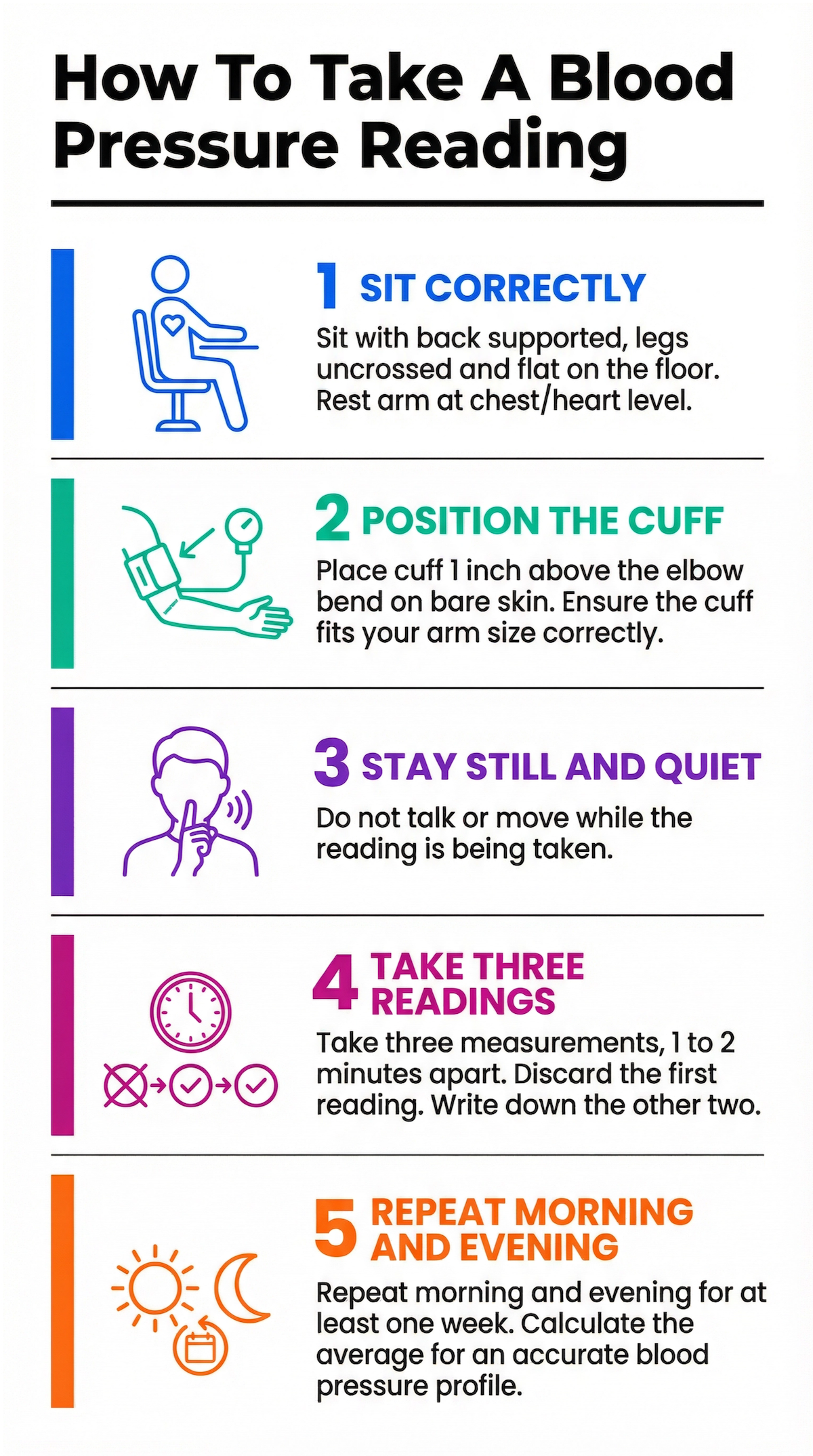
- Sit in a neutral position with the back supported and legs uncrossed/flat on the floor and with arm placed at approximately chest (heart) level.
- Place the cuff approximately 1 inch above the bend of the elbow on bare skin. Ensure the cuff size used fits the arm size correctly.
- Do not talk or move while the reading is taken.
- Take three measurements in the morning when most relaxed 1 to 2 minutes apart. Discard the first reading as this can often be slightly elevated due to initial anxiety and write the other two readings down.
- Repeat the same in the evening for a period of at least one week ideally so that an average of all the blood pressure measurements can then be calculated for a more accurate and true reflection of your blood pressure profile.