




What is pulse rate?
Pulse is the rhythmic expansion and contraction of the arteries as blood is pumped by the heart and which can be felt at certain locations of the body, most commonly the wrist (radial) and neck (carotid).
Each pulsation represents a heartbeat, and the pulse rate is the number of heart beats per minute (bpm).
Why measure pulse rate?
A regular pulse indicates that your heart is effectively pumping blood throughout the body and our pulse rate can be reflective of our health in general such as physical fitness.
In practice, it is most useful and the easiest to determine two features of the pulse:
1. Pulse rate:
At times, when the pulse is too high (tachycardia) or too low (bradycardia), it can be a sign of an underlying abnormality such as heart or thyroid problems.
2. Pulse rhythm:
Our heart (for the most part) should beat at a regular interval. When our heart beats irregularly this usually requires further investigation as it can be a sign of a rhythm abnormality of the heart.
How do you measure pulse rate?
To obtain an accurate pulse reading:
1. Find a quiet and comfortable space:
Choose a calm environment to minimize external influences on your pulse rate.
2. Locate your pulse:
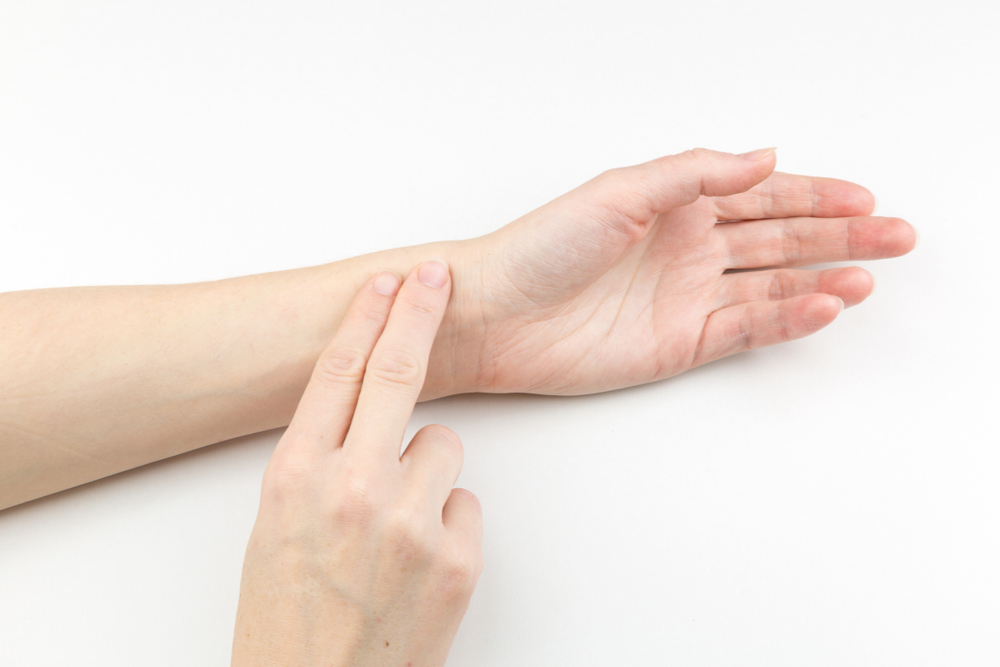
Common pulse points include the wrist (radial artery) towards the thumb side (see below) and the neck (carotid artery).
Note: never press on both sides of the neck at the same time, as this can restrict blood flow to the brain and cause lightheadedness or fainting.
It is often easiest to use two to three fingertips (index, middle and fourth fingers) and applying light pressure at the site to feel the pulse. Avoid using the thumb, since this has a pulse of its own.

3. Count the beats:
Using a timer or watch, count the number of beats you feel within a 60-second interval.
4. Ensure proper technique:
Maintain a light touch when feeling for your pulse. Pressing too hard may obstruct blood flow, leading to inaccurate readings.
What is a normal pulse rate?
A normal resting pulse rate for adults typically falls between 60 and 100 bpm at rest. Athletes may have lower resting rates due to enhanced cardiovascular fitness. Children will have different ranges depending on the age.

Remember, like blood pressure, pulse rate is dynamic and will go up and down depending on several factors including:
- Age
- Body temperature
- Physical activity
- Pain
- Emotions and stress
- Medication
- Caffeine intake
Understanding these factors can provide context to your pulse readings.