

What is body temperature?
Body temperature is one of the core 'observations' or 'vital signs' that reflects the balance between heat production and heat loss within the body. It is measured in degrees Celsius (°C) or Fahrenheit (°F).
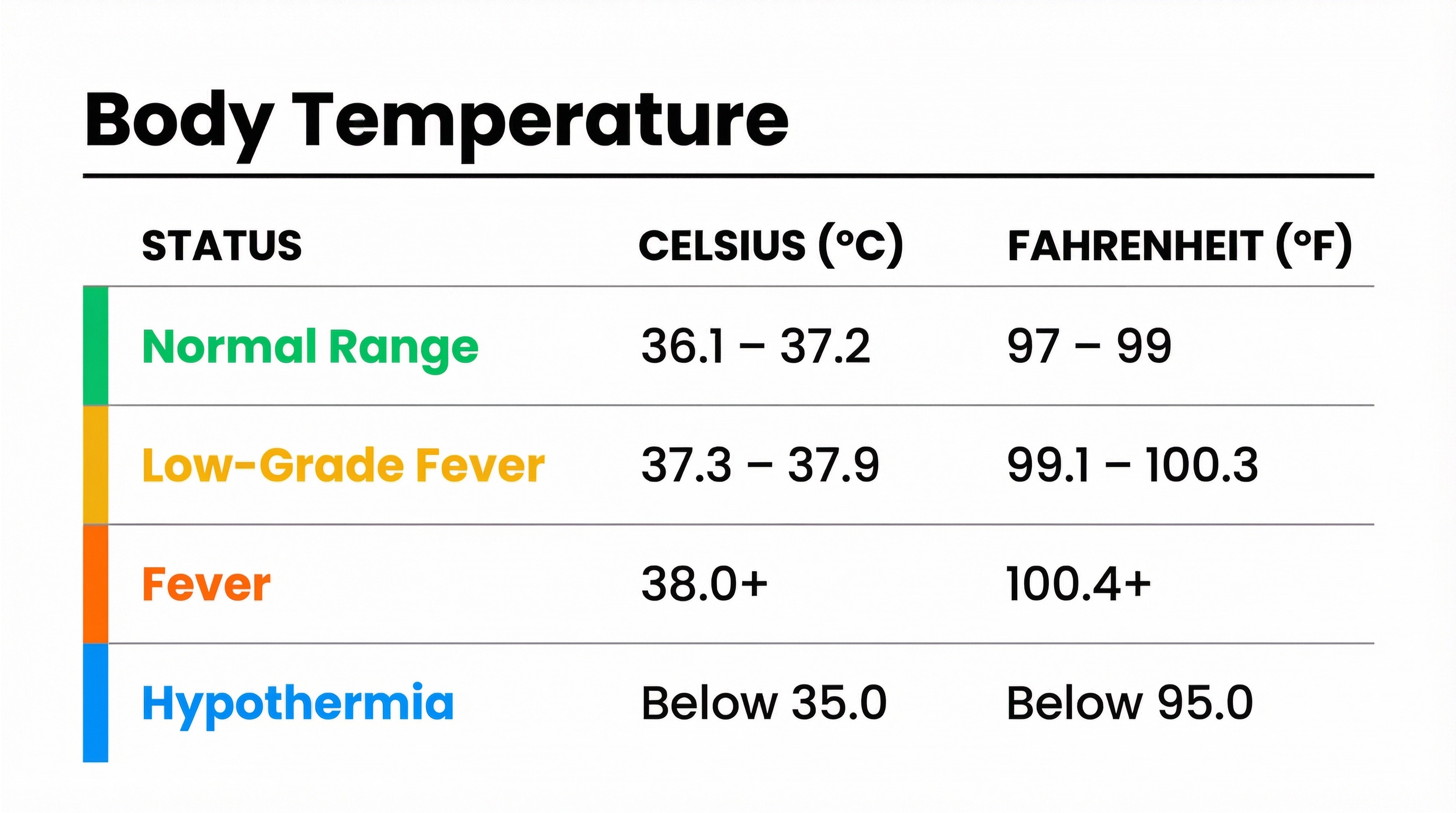
The average adult's normal body temperature hovers around 37 degrees Celsius (98.6 degrees Fahrenheit) but like blood pressure, individual variation exists with a range from 36.1°C (97°F) to 37.2°C (99°F).
Temperature can also vary slightly depending on various factors such as:
- Time of day: following our natural body clock (circadian rhythm). It is usually lowest in the early hours (around 4am) and highest in the late afternoon.
- Menstrual cycle: basal body temperatures can fluctuate slightly with the menstrual cycle in women.
- Age: older adults often have lower baseline temperatures whereas infants and young children often have higher baseline temperatures.
- Health conditions: such as thyroid disorders in which there may be some dysregulation of temperature.
- Digestion: food processing (thermogenesis) can cause a slight rise in temperature after a heavy meal.
- Stress and emotion: triggering the 'fight or flight' response which may raise core temperature slightly.
- External factors: such as ambient air temperature and clothing.
Why is it useful to measure body temperature?
Measuring body temperature can help to:
- Detect an infection: When you have an infection, your body temperature will often rise. This is because your body is fighting off the infection and raising the temperature makes it more difficult for the bacteria or virus to replicate.
- Identify other health problems: Sometimes, a high or low body temperature can be a sign of an underlying health problem, such as a thyroid disorder.
How can body temperature be measured?
There are several ways to measure body temperature. The most common methods include:
Tympanic (ear) thermometer:
This is a common, quick and easy way to measure temperature. The thermometer is placed in the outer ear canal to obtain a reading.
Pulling the ear gently can help to straighten the ear canal and ensure a snug fit for an accurate reading.
Oral thermometer:
This is one of the commonest types of thermometers. The thermometer is placed under the tongue and held in place with the mouth closed until a reading is taken.
Wait at least 15-30 minutes after eating or drinking hot/cold substances before taking an oral temperature.
Axillary (armpit) thermometer:
This is a good option for children and babies. The thermometer is placed under the armpit with the arm snugly against the body for the recommended time until the thermometer beeps.
Keep the area as dry as possible when taking a measurement.
Infrared (forehead) thermometer:
This method is quick, non-invasive and suitable for children and adults. It is also useful when many measurements need to be taken quickly (e.g. in a screening setting). However, it may be less accurate than other forms of measurement.
Keep the forehead dry, free from sweat or hair for optimal results.
Rectal thermometer:
This is the most accurate type of thermometer, but it is not recommended for adults.
Tips for accurate temperature readings
1. Choose the right thermometer: different thermometers have specific uses, so choose the one most appropriate for the age group and situation.
2. Follow manufacturer instructions: always adhere to the instructions provided with the thermometer as each device may have slightly different specifications.
3. Rest before measurement: wait for at least 15 minutes after physical activity or consuming hot/cold substances before checking temperature.
4. Consistent method: sticking to one method for consistency can help to monitor trends in body temperature over time.
What is considered a fever?
Fever: A body temperature of 38°C (100.4°F) or higher is indicative of a fever.
Low-Grade Fever: some sources might use the term "low-grade fever" for temperatures slightly above the normal range but below 38°C (100.4°F).
What is considered hypothermia?
Hypothermia is when the body temperature drops dangerously low, to below 35°C (95°F).
Summary
It is important to be aware that the method of measurement can affect the recorded temperature to a degree (not literally!). For example, oral, rectal, ear, and forehead temperature measurements may yield slightly different readings, however the cut-off ranges above for fever and hypothermia hold true.
It can be helpful to be familiar with your own baseline temperature and recognize any significant deviations from your normal range.